Introduction
In today’s digital world, your personal brand is just as important as a business brand. Many businesses evolved from individual influence even before digital marketing was born. Whether you are a student, freelancer, or entrepreneur, people often “Google” you or your brand before meeting you. This is where a SWOT analysis (Strengths, Weaknesses, Opportunities, and Threats) can help you better understand your digital presence.
By conducting a Digital SWOT for personal branding, you can easily identify your strengths—such as what makes you unique from others—work on improving weaknesses, take advantage of growth opportunities, and protect yourself from challenges faced in day-to-day business. This blog will guide you step by step on how and where to apply SWOT to your personal brand to boost your online visibility, long-term identity, self-growth, and business development.
What is Personal Branding and Why Does it Matter?
Personal branding is how we present ourselves on various online platforms through social media profiles, websites, blogs, portfolios, or even how we engage with others in digital spaces.
A strong personal brand helps you:
- To build credibility and trust.
- Increase online and brand visibility in your industry.
- Helps to provide various job and business opportunities.
- Position yourself as an expert in your field of business.
- Stay competitive in the digital economy.
Example: A student showcasing their personal portfolio on professional platforms attracts offers, while someone without a visible digital profile might get ignored.
How SWOT Works for Personal Branding
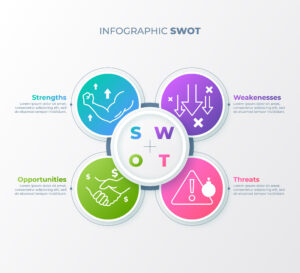
SWOT stands for:
- Strengths – What you are best at.
- Weaknesses – What needs to be improved.
- Opportunities – Growth chances available.
- Threats – External challenges that may affect your brand.
Applying personal branding, SWOT gives you a clear roadmap to grow digitally and strategically.
1. Strengths: Highlight What You Are Best At
Your strengths should be the first quality that makes you stand unique and be valuable. This should be the core of your online identity.
Examples of strengths in personal branding:
- Specialised skills in (design, content writing, coding, teaching).
- Strong communication or leadership qualities.
- A professional-looking LinkedIn profile or personal website.
- Consistent social media engagement.
- Positive testimonials, awards, or achievements.
Tip: List 3–5 strengths and showcase them across social media platforms. For example, if your strength is “public speaking,” regularly share snippets of your talks or insights from webinars on LinkedIn.
Case Study Example:
Rahul, a freelance photographer, who was strong on “creative storytelling.” That helped him to stay unique by posting his videos in a story format on Instagram with short stories about each project. Within six months, his profile reached over 50K followers and landed him brand collaborations.
2. Weaknesses: Areas That Need Improvement
Weaknesses are aspects we have to work on, which might hold you back from building a strong personal brand.
Common weaknesses include:
- No regular updates on social media.
- Outdated on social media or CV.
- Lack of confidence in networking skills.
- Limited knowledge of digital tools (SEO, video editing, Canva).
- Minimal online presence compared to peers.
Tip: Instead of ignoring weaknesses, turn them into growth opportunities. For example, if your weakness is in marketing your skills build a personal professional page on various social platforms, projecting your design skills.
Mini Example:
Anita, a designer student, weak in building networks, immediately identified and created a designer portfolio on various platforms and started selling it as a digital product.
3. Opportunities: Where You Can Grow
Opportunities are external chances or favourable circumstances that can help you improve your personal brand by generating revenue or even expanding operations.
Examples of opportunities in the digital world:
- Use free platforms like Medium, Behance, or YouTube to showcase expertise.
- Growing demand for personal brands in the gig economy.
- Short-form video content trends (Instagram Reels, YouTube Shorts, TikTok).
- Online certifications, webinars, and networking communities.
- Rising niches like sustainability, AI, and remote work are where personal brands thrive.
Tip: Keep an eye on new platforms and trends. Early adopters often gain visibility faster.
Case Study Example:
Karthik, a young entrepreneur, used Clubhouse (a trending app in 2022) to share startup advice. Though the app’s hype slowed down, his sessions gave him a loyal audience base, which he later moved to LinkedIn and YouTube.
- Opportunities: Where You Can Grow
Opportunities are external chances or situations that can help you improve your personal brand.
Examples of opportunities in the digital world:
- Free online platforms like Medium, Behance, or YouTube give an opportunity to showcase expertise.
- Growing demand for personal brands among freelancers and temporary workers.
- Trending short-form video content (Instagram Reels, YouTube Shorts, TikTok).
- Online certifications, webinars, and networking communities.
- Personal brands boom through rising niches like sustainability, AI, and remote work.
Tip: Keep yourself updated on various platforms and trends. Only early users often gain visibility faster.
Case Study Example:
Karthik, a young entrepreneur, used Clubhouse, which was a trending app in 2022. He used this platform to share start up advice. Though the app usage and hype slowed down, he earned a loyal audience through his sessions. Later, he moved to LinkedIn and YouTube.
4. Threats: External Challenges You Should Watch Out For
Threats are factors that influence and affect personal brand, and which will be out of your control.
Examples of threats include:
- Strong competition in your industry.
- Negative online comments or reviews, sometimes from unknown users.
- Constant changes and updates in social media algorithms.
- Over-publicity or sharing too much personal information.
- Cybersecurity issues like hacking or identity theft.
Tip: Maintain professionalism with all online interactions. Use privacy settings wisely, and regularly Google your own name to see what appears.
Example: A marketing professional faced a threat by getting a negative review, still he addressed it immediately and politely by sharing his side with proof of good work and turned this situation to build an opportunity.
Step-by-Step Guide to Perform a Digital SWOT Analysis Personal Branding
- Audit your online presence
- List your strengths
- Identify weaknesses
- Spot opportunities
- Watch threats
Personal Branding SWOT Checklist
- Whether your LinkedIn profile been updated with a professional photo and bio?
- Are you sharing your expertise knowledge on at least 2-3 platforms?
- Are you posting content regularly (weekly or biweekly)?
- Are you engaged with other professionals and communities?
- Are you monitoring your online reputation regularly?
- Are you constantly updating your skills?
- Please tick yourself for the above checklist and make an analysis.
Industry Stats that Prove the Power of Personal Branding
- 70% of employers check social media profiles before hiring (CareerBuilder survey).
- 82% of consumers trust a company more when its leadership team is active on social media (Brandfog).
- 92% of recruiters use LinkedIn to find candidates (Jobvite Recruiter Nation Report).
- Personal branding can increase job opportunities by 50% according to LinkedIn’s internal data.
Conclusion
Your digital identity card is created only through your online presence. With a simple SWOT analysis, you gain clarity on where you are strong and how to grow bigger. By focusing on your strengths, improving weaknesses, grabbing opportunities, and protecting against threats, you can build a personal brand that opens doors to career growth, collaborations, and self-development.
Remember, self-growth starts with self-identity, and Digital SWOT can be your partner in this journey.




Leave a Reply to How to Write a Reel Script That Grabs Attention Cancel reply